


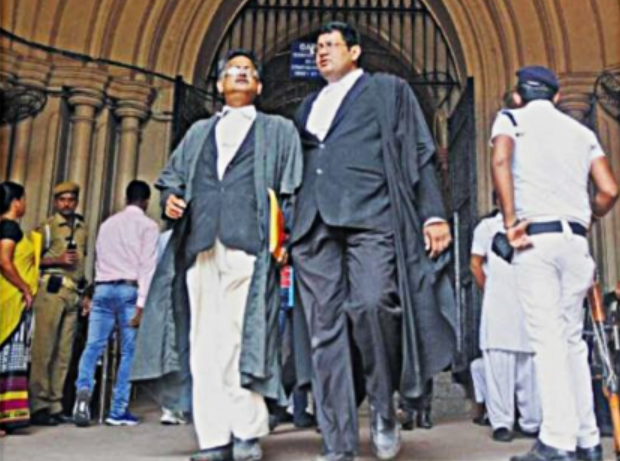
Inefficient judicial processes create uncertainty and stifle growth. While judicial reforms boost productivity, government litigation makes the problem worse. After all, the government is the largest litigator in India. Therefore, the Union government is now working to reduce unnecessary litigation.

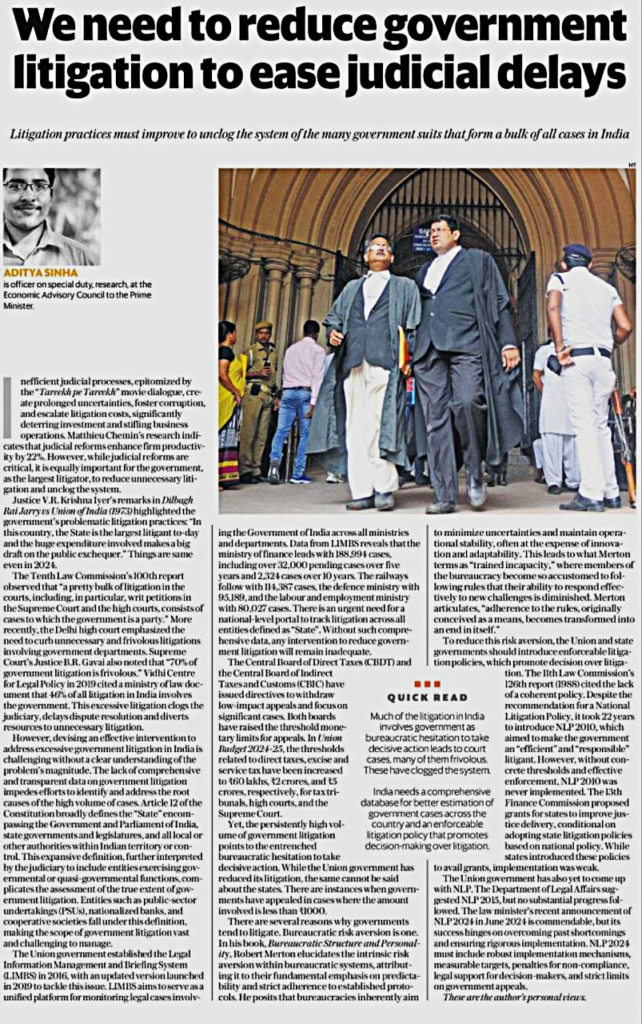
Why Judicial Delays Hurt Growth
Long delays, often summed up by the phrase “tareekh pe tareekh”, prolong uncertainty. They also raise litigation costs and can breed corruption. As a result, they deter investment and hurt business. In fact, research by economist Matthieu Chemin found that judicial reforms can raise firm productivity by about 22%.
The State as the Largest Litigant
The concern is not new. In Dilbagh Rai Jarry vs Union of India (1973), Justice V.R. Krishna Iyer called the State the largest litigant in the country. Similarly, the Law Commission’s 100th report noted that government cases form a large share of court litigation. Moreover, a 2019 Vidhi Centre for Legal Policy study cited a ministry estimate that 46% of all cases involve the government.
Why Government Litigation Is Hard to Reduce
- Broad definition of State: Article 12 of the Constitution defines the “State” widely. It covers governments, legislatures, local bodies and public sector entities. Hence, measuring total government litigation is difficult.
- Weak data: Although the Legal Information Management and Briefing System (LIMBS) began in 2016, it does not yet track every entity.
- Risk aversion: Officials often prefer to appeal rather than take a firm decision. Consequently, many weak cases reach higher courts.
Steps Taken So Far
- Higher appeal limits: The CBDT and CBIC have raised monetary limits for filing tax appeals. Thus, they avoid low-value cases.
- National Litigation Policy: The 2010 policy was never fully implemented. However, the government announced a new National Litigation Policy in June 2024.
Way Forward on Government Litigation
First, India needs a complete national database of government cases. Next, the new litigation policy needs measurable targets and penalties for non-compliance. Finally, officials need legal support and protection for honest decisions. Together, these steps can unclog courts and improve ease of doing business.
Syllabus link: GS Paper II – judiciary, governance and reforms. For official data, visit the Department of Justice. Also, read our note on the increase in Supreme Court judge strength.
Preparing for the UKPSC Upper PCS 2026 prelims? Join our UKPSC 2026 Prelims Test Series for regular practice.