

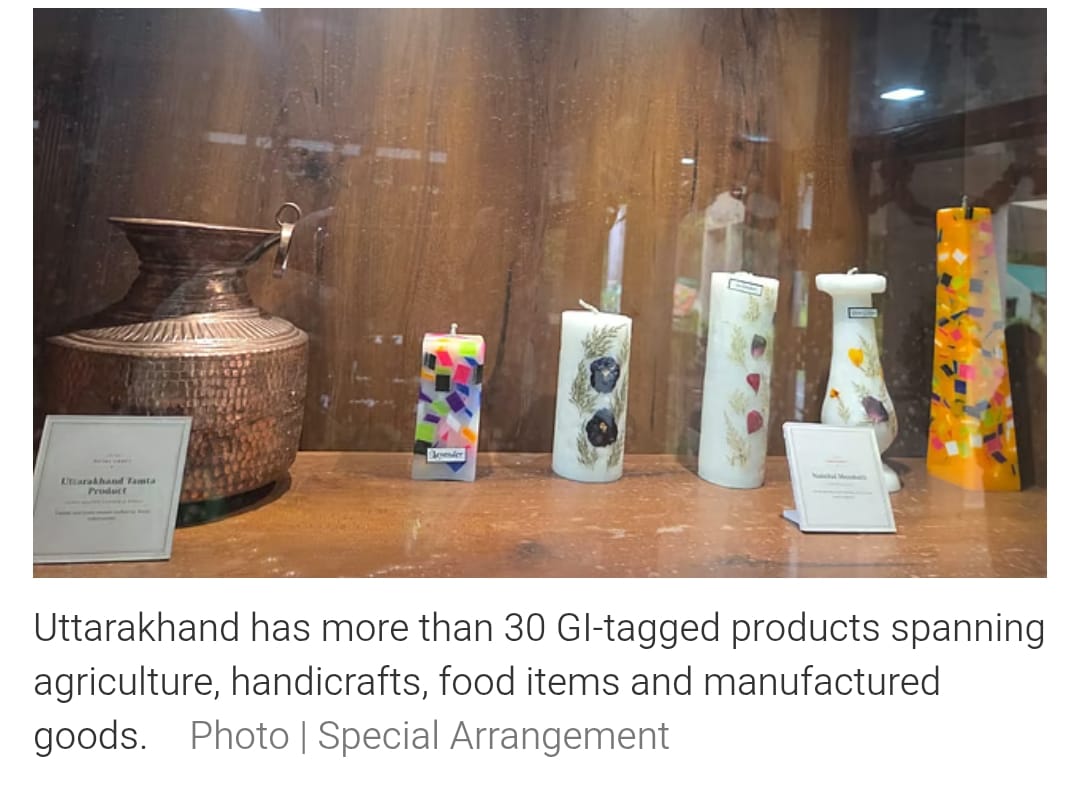
Uttarakhand has opened its first dedicated Geographical Indication (GI) Products Gallery. Specifically, it is located at the Forest Training Academy (FTA) in Haldwani. This landmark step celebrates and preserves the unique cultural and farm legacy of the Himalayas. In fact, the GI Products Gallery brings the state’s prized produce, ancient crafts and indigenous heritage under one roof.

Purpose of the GI Products Gallery
Primarily, the initiative aims to act as an educational and cultural bridge. According to Academy Director Sanjiv Chaturvedi, the gallery will introduce visitors to Uttarakhand’s rich biodiversity. Likewise, it will showcase centuries of artisanal history. In short, its audience includes trainees, researchers, government officials and everyday visitors.
A Three-Month Odyssey to the Peaks
Creating the gallery was no small feat. Indeed, the team spent three months sourcing authentic GI-tagged items from remote, high-altitude pockets of the state.
However, displaying perishable farm items without spoilage posed a major challenge. Director Chaturvedi explained the solution:
“Perishable products such as bedu (Himalayan wild fig), Ramnagar litchi, and Ramgarh peach had to be preserved using special scientific methods so that they could be kept on display for long periods.”
— Director Sanjiv Chaturvedi
Inside the GI Products Gallery: Agricultural Treasures
Uttarakhand holds more than 30 GI-tagged products. Together, these span farm goods, handmade textiles, traditional metalwork and organic foods. Notably, the state made history in December 2023 by securing a record 18 GI tags in a single day. Thus, it has cemented its place as a powerhouse of indigenous heritage.
Distinctive Himalayan Agriculture and Foods
In particular, the farm exhibits highlight crops that have adapted to extreme weather and high altitudes over generations:
- Munsiyari White Rajma: First, a nutritious, soft-textured kidney bean from the high alpine valleys.
- Uttarakhand Kala Bhat: A nutrient-dense black soybean and a staple of Kumaoni winter diets.
- Almora Lakhori Chilli: Also, a small, very pungent yellow chilli prized for its unique flavour.
- Berinag Tea and Tejpatta: Hand-compressed local tea along with aromatic Indian bay leaves.
- Buransh Squash: A drink made from the antioxidant-rich crimson flowers of the Rhododendron arboreum tree.
What Is a GI Tag?
A Geographical Indication (GI) tag identifies a product that comes from a specific place. Moreover, the product owes its quality or reputation to that origin. In India, the Geographical Indications of Goods (Registration and Protection) Act, 1999 governs GI tags. Typically, a registration stays valid for 10 years and can be renewed. As a result, GI tags protect local producers and boost rural incomes.
Why the GI Products Gallery Matters for UKPSC
Notably, GI tags of Uttarakhand are a favourite topic in UKPSC and UKSSSC exams. Therefore, revise the key products and the December 2023 record. For the official GI registry, visit the Intellectual Property India website. Also, read about a unique hill breed in our note on unique facts about the Badri cow.
Preparing for the UKPSC Upper PCS 2026 prelims? Join our UKPSC 2026 Prelims Test Series for regular practice.