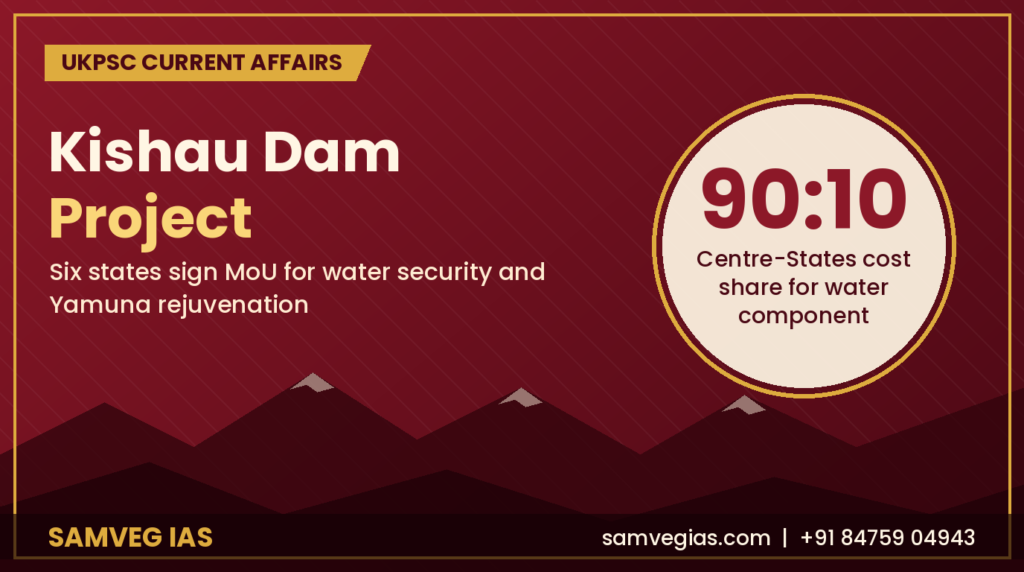
Six states have finally agreed on the Kishau Dam Project. For years, a long political and administrative deadlock had stalled this multi-purpose water and energy project. Now, it promises regional water security and a cleaner Yamuna. Moreover, it offers a strong example of cooperative federalism and infrastructure development.
Kishau Dam Project: How the Deadlock Ended
Union Home Minister Amit Shah led the initiative to end the deadlock. He convened a high-level meeting in New Delhi. There, all six states reached a consensus and signed a Memorandum of Understanding (MoU). Thus, the project can now move towards implementation.
Notably, the agreement reflects the Centre’s policy of “Samvaad se Samadhan” (Resolution through Dialogue). In fact, this approach aims to settle long-pending matters of national importance.
Key Stakeholders and Participating States
The breakthrough came through consensus between the Union Government and six key states:
Specifically, these states are Uttarakhand, Himachal Pradesh, Delhi, Uttar Pradesh, Haryana and Rajasthan.
Cost Sharing and Next Steps
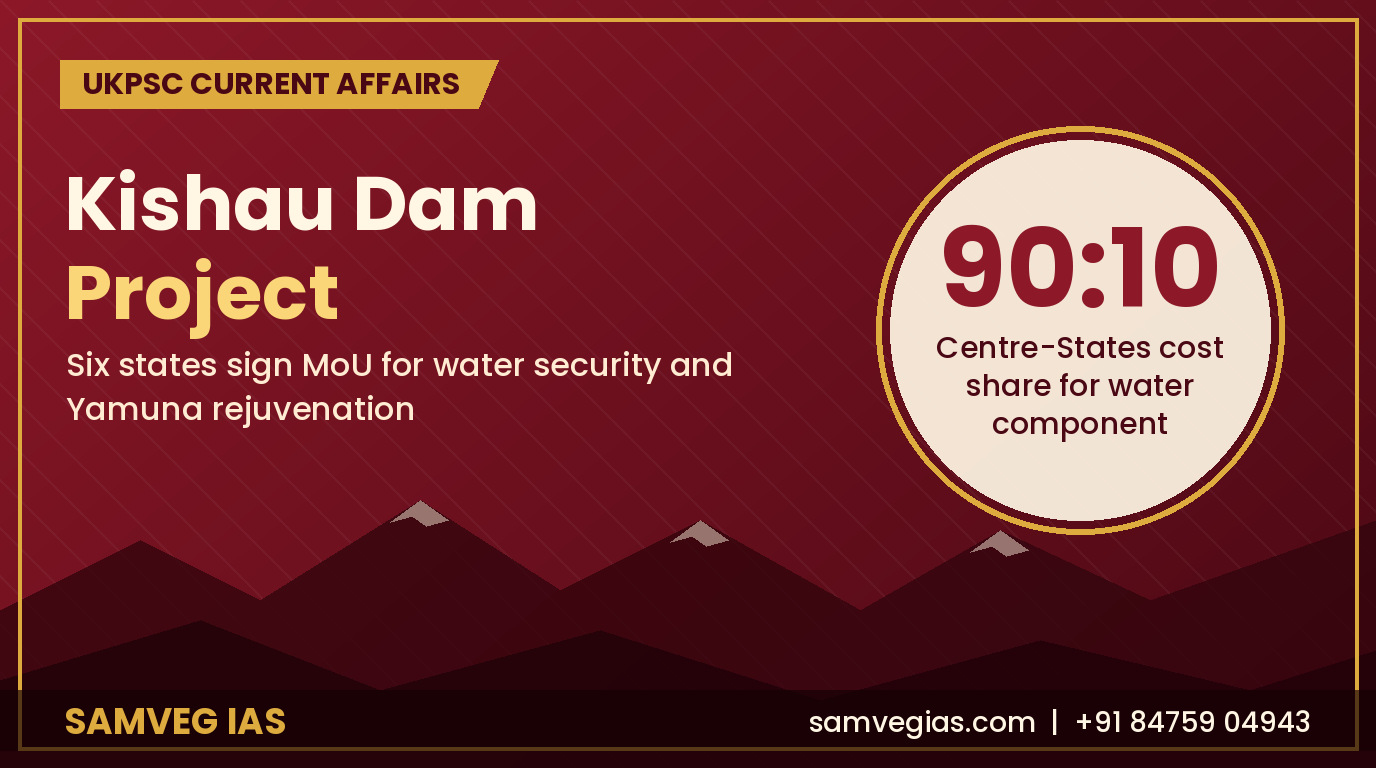
- Central Government share: First, the Centre will bear 90% of the water component’s cost as central assistance.
- States’ share: Meanwhile, the six beneficiary states will share the remaining 10% of the cost.
- Next step: Next, after the MoU, the Union Cabinet will take up the project for final approval.
- Water and power exchange: In lieu of its financial share and power participation, Himachal Pradesh’s water share will go to Delhi and Rajasthan.
Impact of the Kishau Dam Project on the Yamuna
- Drinking water: Firstly, the arrangement will largely meet the drinking water needs of Delhi and Rajasthan. In addition, it will strengthen regional water resource management.
- Clean water flow: Secondly, the project will ensure a steady, clean and adequate ecological flow in the Yamuna. Hence, it marks a firm step towards river rejuvenation.
- Environmental restoration: Finally, a regular flow will improve the river’s aquatic ecosystem. Consequently, it will boost pollution control efforts across the Yamuna basin.
Why It Matters for UKPSC and UPSC
- Syllabus mapping: Functions of the Union and the States, interstate water disputes, cooperative federalism and water resource management.
- Key takeaway: Overall, the Kishau Dam agreement is a prime example of cooperative federalism. Here, several states pool resources for shared socio-economic gains. Clearly, dialogue (Samvaad) can unlock multi-state infrastructure logjams.
For official updates on river projects, visit the Department of Water Resources, Ministry of Jal Shakti. To strengthen your basics, explore our UKPSC Upper PCS 2026 Prelims Crash Course.
Preparing for the UKPSC Upper PCS 2026 prelims? Join our UKPSC 2026 Prelims Test Series for regular practice.