
Topic: Infrastructure, Environment, and Regional Development
Category: Uttarakhand State Current Affairs / GS Paper III (Economic Development & Environment)
Introduction
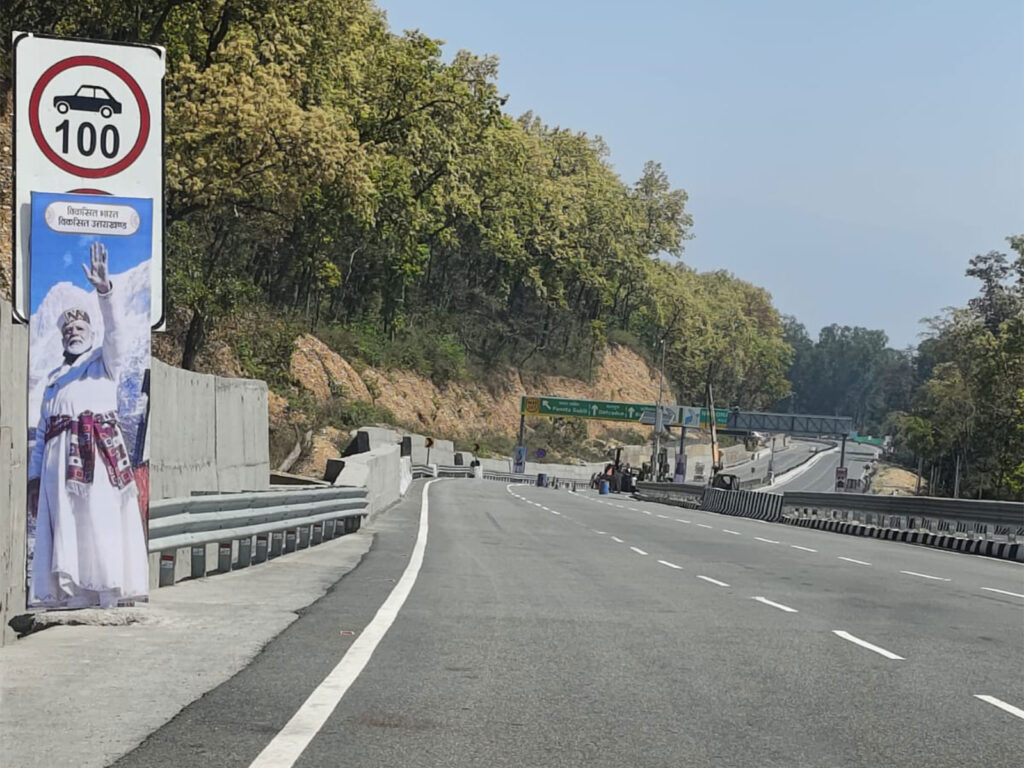
On April 14, 2026, Prime Minister Narendra Modi undertook a high-profile visit to Uttarakhand and the neighboring Saharanpur (UP) to review and inaugurate the transformative Delhi-Dehradun Economic Corridor. This visit underscores the state’s transition toward world-class infrastructure while maintaining ecological balance.
1. Event Chronology & Spiritual Significance
- Wildlife Review: The PM commenced his visit at Saharanpur, UP, at 11:15 AM to inspect the elevated wildlife corridor section of the expressway.
- Spiritual Stop: At 11:40 AM, the PM performed Darshan and Pooja at the Jai Maa Daat Kali Temple (Dehradun). This temple holds immense cultural significance as the gateway to the Doon Valley.
- Official Launch: The formal inauguration and public address took place in Dehradun at 12:30 PM.
2. The Delhi-Dehradun Economic Corridor: Key Facts
For UKPSC aspirants, the following technical and geographical data is crucial for Prelims and Mains:
- Total Length: 213 km.
- Project Cost: Over ₹12,000 crore.
- Lanes: 6-lane access-controlled expressway.
- Connectivity: Traverses three states/UTs—Delhi, Uttar Pradesh, and Uttarakhand.
- Time Efficiency: Reduces travel time between the national capital and the state capital from 6+ hours to 2.5 hours.
- Infrastructure Components:
- 10 Interchanges.
- 3 Railway Over Bridges (ROBs) and 4 Major Bridges.
- 12 Wayside Amenities for passenger comfort.
- Advanced Traffic Management System (ATMS): Integrated for real-time monitoring and commuter safety.
3. Ecological and Wildlife Features (Environmental Sustainability)
Uttarakhand exams frequently focus on the “Man-Animal Conflict” and “Sustainable Development.” This project is a global benchmark for eco-sensitive engineering:
- Asia’s Milestone: It features a 12 km long wildlife elevated corridor, cited as one of the longest in Asia, allowing animals to move freely beneath the expressway.
- Dedicated Underpasses: Includes two elephant underpasses (200 meters each) and eight animal passes.
- Daat Kali Tunnel: A 370-meter long tunnel near the Daat Kali temple helps bypass sensitive forest patches without disturbing the natural terrain.
- Objective: These features are designed to minimize roadkills and reduce man-animal conflict in the Shivalik forest range and Rajaji National Park peripheries.
4. Socio-Economic Impact on Uttarakhand
The inauguration of this corridor is expected to have a multiplier effect on the state’s economy:
- Tourism Boost: Faster connectivity to the “Gateway to Garhwal” (Dehradun) will increase tourist inflow to Mussoorie, Char Dham, and religious circuits.
- Trade & Development: Facilitates easier transport of local produce and industrial goods from SIDCUL zones to the Delhi-NCR market.
- Real Estate & Employment: New economic hubs are expected to emerge along the 10 interchanges.
UKPSC Exam Pointer: Key Vocabulary & Concepts
- Economic Corridor: An integrated network of infrastructure within a geographical area designed to stimulate economic development.
- Access-Controlled: A highway where entry and exit are regulated via ramps to maintain high-speed traffic flow.
- Wildlife Mitigation: Technical term for structures (underpasses/overpasses) designed to prevent habitat fragmentation.
Probable Questions for UKPSC Mains
- GS Paper III (Economy): “Discuss the significance of the Delhi-Dehradun Economic Corridor in transforming the tourism potential and regional economy of Uttarakhand.” (125 words)
- GS Paper VI (Environment): “How does the Delhi-Dehradun Economic Corridor balance the needs of infrastructure development with the ecological sensitivity of the Shivalik range? Elaborate on the wildlife protection features.” (250 words)