
Introduction
In a significant move toward revitalizing India’s premier policy think-tank, the Government of India notified the reconstitution of the National Institution for Transforming India (NITI Aayog) on April 24, 2026. The restructuring brings in a blend of seasoned economists, seasoned administrators, and domain experts in science and healthcare, signaling a strategic shift toward evidence-based governance and technological innovation as India targets “Viksit Bharat” by 2047.
Key Appointments
The new leadership team is characterized by a high degree of technical expertise:
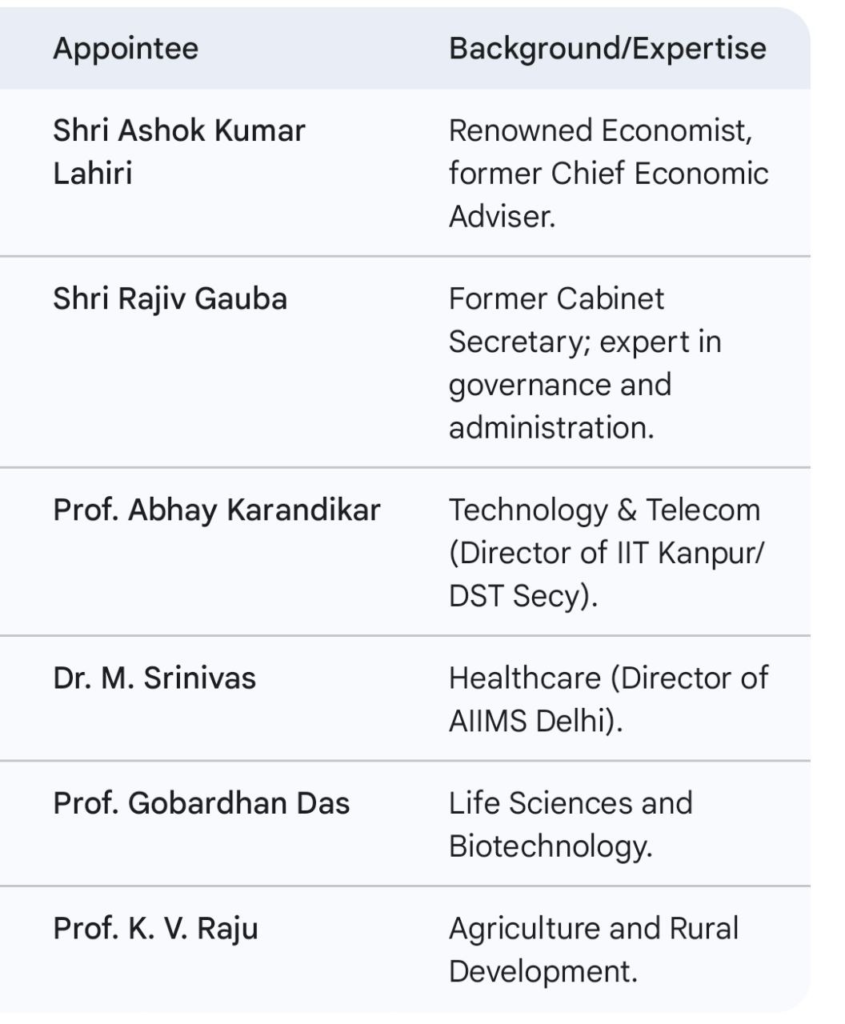
- Vice Chairperson: Shri Ashok Kumar Lahiri. An eminent economist and former Chief Economic Advisor (CEA) to the Government of India, Shri Lahiri replaces Shri Suman Bery. His extensive experience with the 15th Finance Commission and international bodies like the IMF and World Bank is expected to provide a robust fiscal and macroeconomic direction.
- Full-Time Members:
- Shri Rajiv Gauba: Former Cabinet Secretary, bringing deep institutional memory and administrative prowess.
- Prof. K. V. Raju: Renowned economist and former part-time member of the PM-EAC, specializing in rural development and agriculture.
- Prof. Gobardhan Das: Distinguished molecular scientist and Director of IISER Bhopal, focusing on biotechnology and healthcare research.
- Dr. M. Srinivas: Director of AIIMS New Delhi, ensuring that public health remains at the core of the development agenda.
- Prof. Abhay Karandikar: Secretary, Department of Science and Technology (DST) and former Director of IIT Kanpur, driving the focus on telecommunications and indigenous technology.
Functional Pillars of NITI Aayog
The new team will be guided by the established seven pillars of NITI Aayog’s effective governance:
- Pro-people: Fulfilling the aspirations of society.
- Pro-activity: Anticipating and responding to citizen needs.
- Participation: Involvement of the citizenry.
- Empowering: Specifically women and the marginalized.
- Inclusion of all: Easing the divide (Antyodaya).
- Equality: Providing opportunity to the youth.
- Transparency: Making government visible and responsive.