
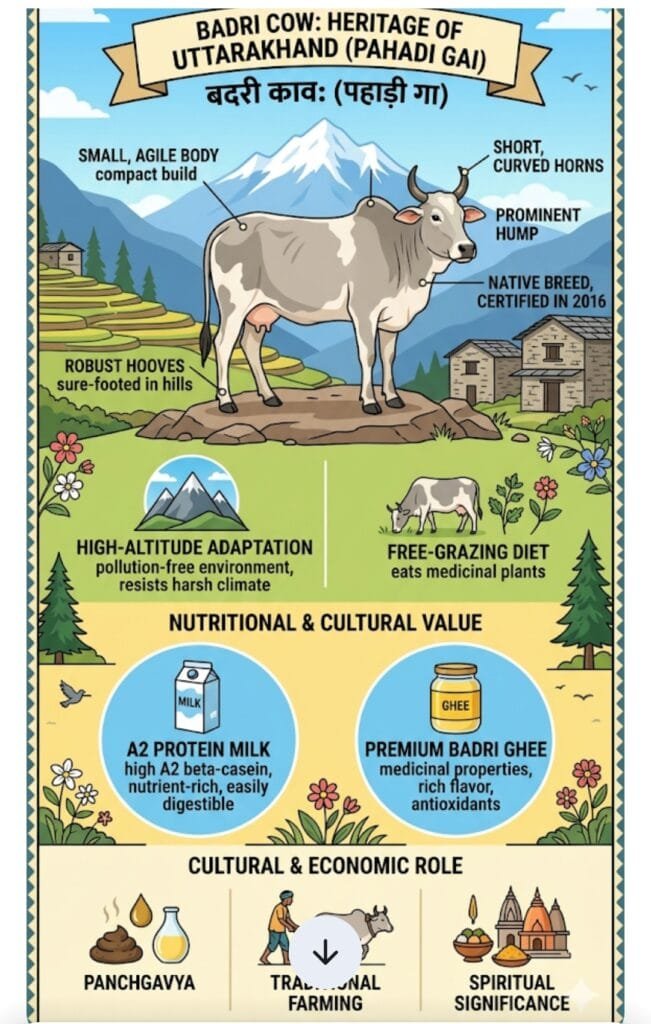
The Badri cow, locally known as the Pahadi Gai, is the first certified indigenous cattle breed of Uttarakhand. Named after the holy shrine of Badrinath, this unique breed is deeply intertwined with the ecology, culture, and rural economy of the Kumaon and Garhwal hills.
1. Key Characteristics and Habitat
- Physique: Badri cattle are petite, lightweight (averaging 200–250 kg), and highly active. They have short, strong legs, firm hooves, and upward/inward curved horns that make them incredibly sure-footed, allowing them to navigate steep, rugged mountain terrain with ease.
- Coat Colors: Their coats vary widely, ranging from black, brown, and grey to red and white.
- Habitat: They thrive in the high-altitude, pollution-free environments of Uttarakhand (typically above 1,500 meters) and are highly resilient to harsh climatic conditions and local diseases.
- Official Recognition: It was officially certified as an indigenous breed in 2016 by the ICAR-National Bureau of Animal Genetic Resources (NBAGR) with the accession number INDIA-CATTLE-2400-BADRI-03040.
2. Nutritional and Medicinal Value
What makes the Badri cow exceptionally valuable is its diet. These cows free-graze on the natural pastures, meadows, and forests of the Himalayas, consuming a variety of medicinal herbs and shrubs.
- High A2 Protein Milk: Research indicates that Badri cow milk contains up to 90% A2 beta-casein protein—one of the highest percentages among indigenous Indian breeds. This makes it highly digestible and beneficial for individuals with lactose intolerance or metabolic disorders like diabetes and hypertension.
- Therapeutic Ghee: Badri ghee is packed with antioxidants, butyric acid, omega-3 fatty acids, and essential vitamins (A, E, K2). Because of its organic and medicinal value, authentic Badri ghee commands premium prices in the market, often selling for ₹3,000 to ₹5,000+ per kg.
- Panchgavya & Go-mutra: In Ayurveda, the products of the Badri cow are highly prized. Its urine (Go-mutra) and dung possess high antimicrobial and immune-modulating properties and are widely used to prepare organic manures, pest repellents, and Ark (distilled cow urine).
3. Cultural and Economic Significance
- Spiritual Importance: In the hill communities of Uttarakhand, the Badri cow is revered as a motherly figure and is often equated with the mythical Kamdhenu. It is the only breed whose milk and ghee are considered sacred enough for major religious rituals and temple offerings in the region.
- Livelihood for Marginal Farmers: For landless and small-scale farmers in the hills, these cows are crucial. They require very low maintenance and external feed inputs, making them highly economical. Apart from milk, they provide valuable organic manure (Farm Yard Manure) essential for traditional hill agriculture.
4. Challenges and Modern Government Initiatives
Despite their high-value products, Badri cows face a major challenge: low milk productivity. A single cow yields only about 1 to 3 liters of milk per day. This low yield historically led some farmers to crossbreed them or shift to exotic high-yield varieties like Jersey cows, risking the genetic purity of the native breed.
To counter this and boost the rural hill economy, the Uttarakhand government has implemented several strategies:
- Advanced Reproductive Technologies: The state is actively deploying Sex-Sorted Semen technology and Embryo Transfer Methods (including Multiple Ovulation Embryo Transfer – MOET) to selectively breed high-genetic-stock Badri cattle and improve overall milk production without compromising the breed’s natural resilience.
- Branding and Marketing: Cooperative and state initiatives are focusing on the commercial packaging and global marketing of “Badri Ghee” and organic Panchgavya products to ensure that maximum economic returns go directly to the hill farmers.