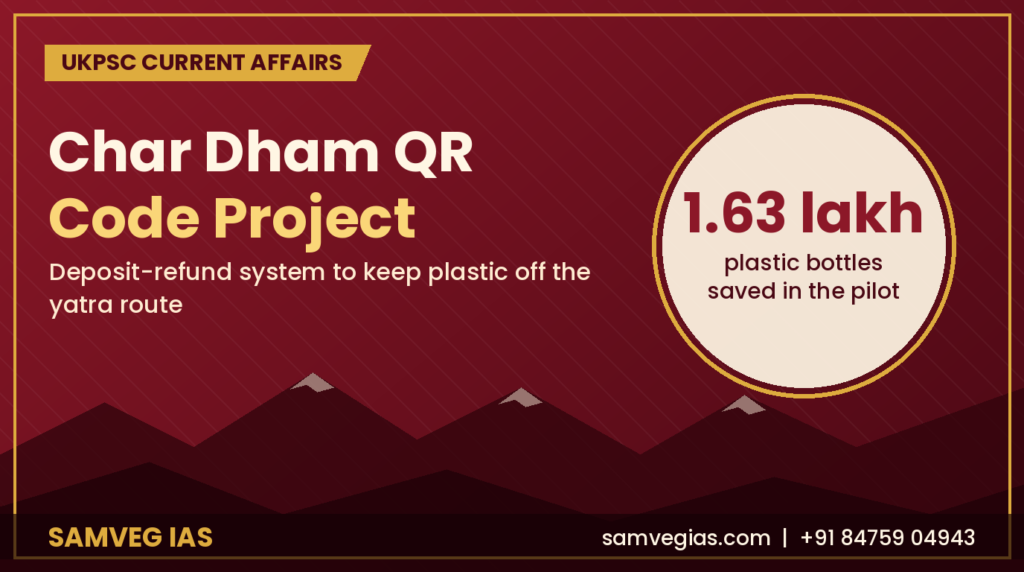
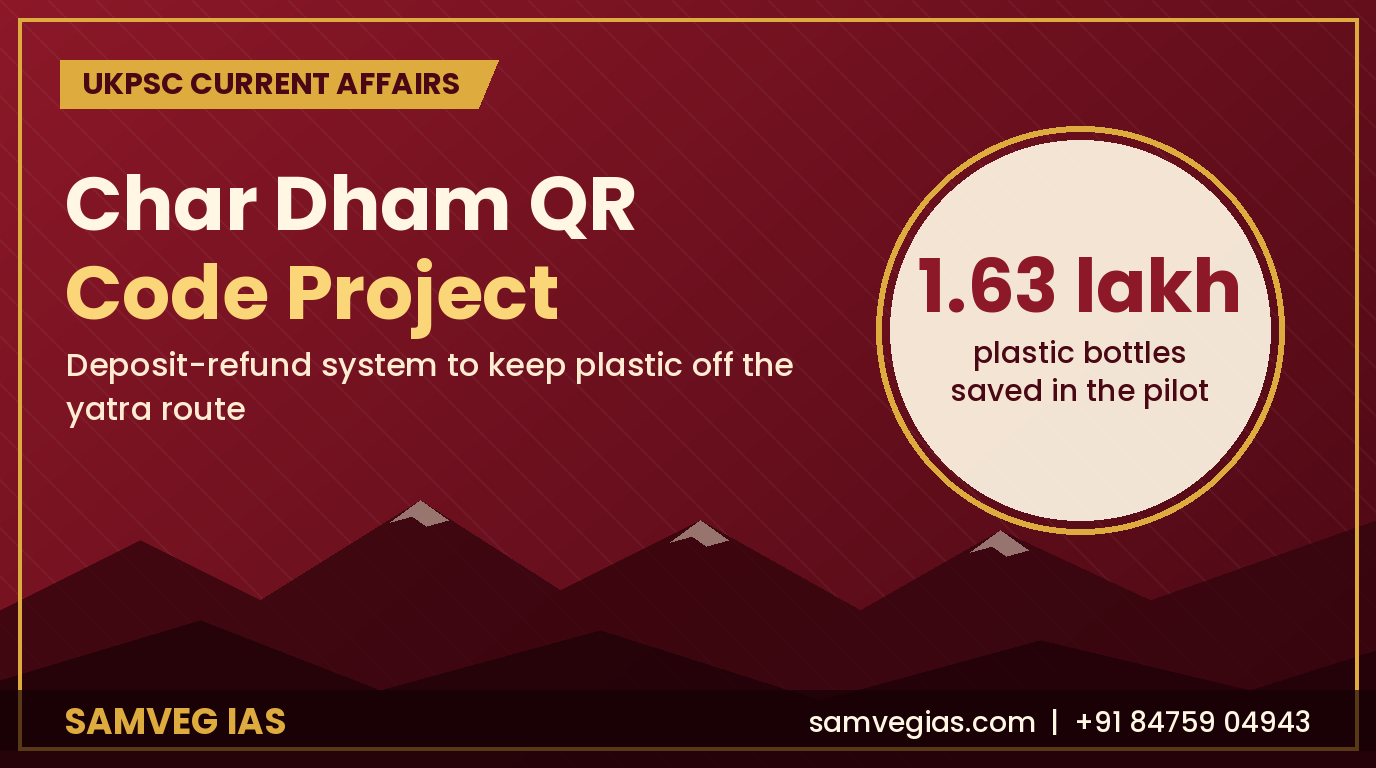
Uttarakhand is using a Char Dham QR code project to stop plastic littering on the yatra route. Under this unique waste-disposal system, pilgrims pay a small refundable deposit on plastic items. Consequently, they have a strong reason to bring the waste back. The state shared this update on 6 April 2023.
How the Char Dham QR Code System Works
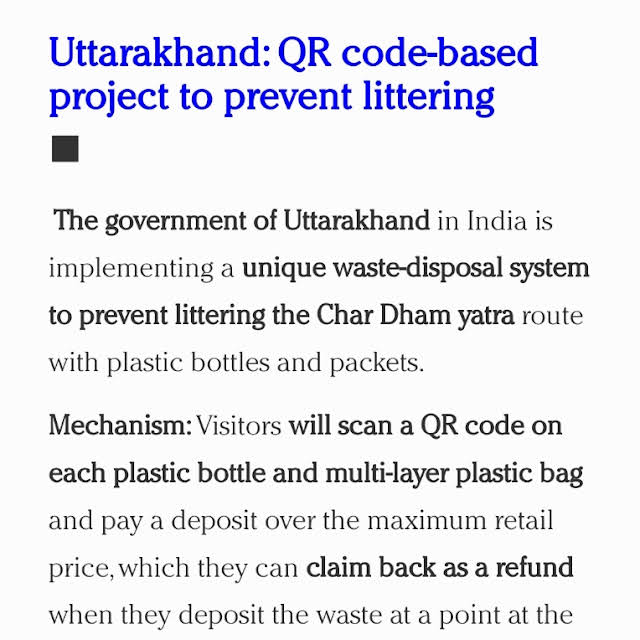
Each plastic bottle and multi-layer plastic bag carries a QR code. The process is simple:
- First, visitors scan the QR code on the item.
- Next, they pay a deposit over the maximum retail price (MRP).
- Then, they drop the empty bottle or packet at a collection point at the end of the yatra.
- Finally, they claim the deposit back as a refund.
Impact of the Pilot Project
So far, the results look encouraging. Last year, the pilot project saved over 1.63 lakh single-use plastic bottles. Otherwise, these bottles could have ended up in the fragile mountain ecosystem.
You can also view the original update on the SAMVEG IAS YouTube channel.
Why Plastic Waste Is a Big Concern in the Himalayas
Lakhs of pilgrims visit Badrinath, Kedarnath, Gangotri and Yamunotri every season. However, the high-altitude routes have limited waste collection facilities. As a result, plastic often ends up in streams, forests and valleys. Moreover, plastic breaks down very slowly in cold climates. Therefore, even small amounts of litter can harm this sensitive ecosystem for years.
What Is a Deposit Refund System?
A deposit refund system (DRS) adds a small refundable charge to a product’s price. In turn, consumers get the money back when they return the used item. Thus, the waste gains value, and people have a reason to return it. Similarly, many countries use such systems for bottles and cans. In India, this approach supports Extended Producer Responsibility (EPR) and a circular economy.
Char Dham QR Code Project: Relevance for UKPSC and UPSC
- Environment: Above all, it covers plastic pollution, waste management and Himalayan ecology.
- Governance: Similarly, it shows the use of digital tools like QR codes in public services.
- Economy: Finally, it reflects the circular economy and market-based tools for pollution control.
For the national policy framework, visit the Ministry of Environment, Forest and Climate Change. Also, read how science revived a hill lake in our note on Naini Lake artificial aeration.
Preparing for the UKPSC Upper PCS 2026 prelims? Join our UKPSC 2026 Prelims Test Series for regular practice.